
在2026年11月11日国际热带木材组织(ITTO)第 62 届国际热带木材理事会(ITTC 62)期间,ITTO贸易咨询组(TAG)举办了市场讨论会。作为TAG的一员,全球林产品绿色供应链倡议(GGSC)罗信坚秘书长受邀参加了本次会议。
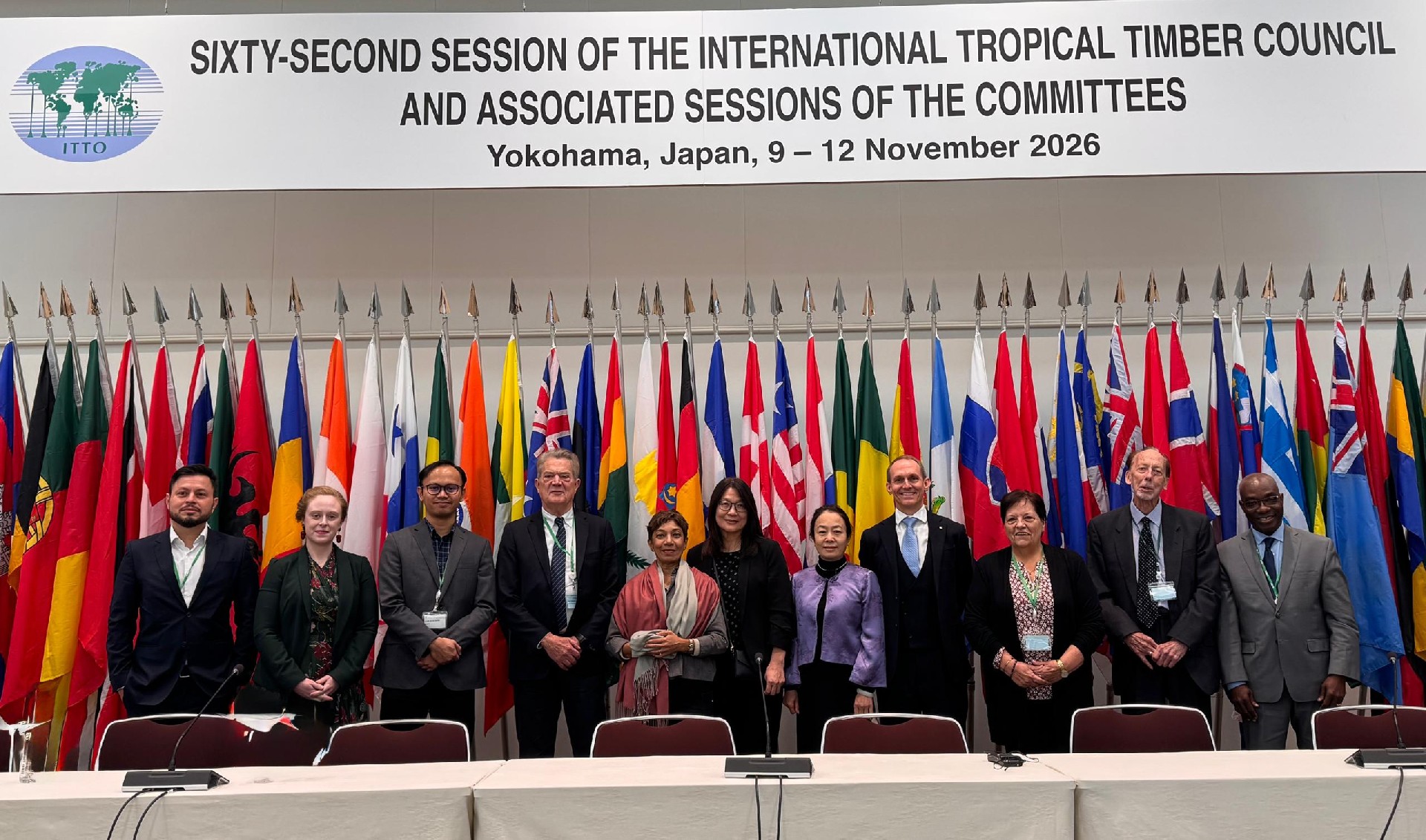
TAG成立于2000年召开的第28届国际热带木材理事会(ITTC 28)期间,主要为ITTC政策制定以及全球木材贸易相关活动提供支持,并反馈来自各国产业界的声音。
会议期间,国际木材产品协会(IWPA)CEO宣读了TAG《2026年贸易声明》。具体内容如下:
2026年贸易声明
今天,我们齐聚横滨,共同庆祝国际热带木材组织(ITTO)成立40周年。ITTO贸易咨询组(TAG)见证了组织数十年来在推动行业发展方面取得的积极成果,但同时也对未来不明朗的前景深感关切。当前,我们正面临结构上的不确定性。贸易政策、环境法规、供应链变化以及地缘政治局势的发展,都在重塑国际市场格局。在这些变化发生之际,许多传统市场的需求趋于疲软,采购模式不断调整,有关木材来源及其合法性的审查日益严格,主要消费市场的监管要求也不断增加。尽管其中许多措施旨在实现合理的政策目标,但这些措施叠加产生的影响,正在给生产商、出口商和进口商带来新的成本与不确定性,甚至影响着国际买家是否还会选择采购木材产品。
首先,我想明确阐明立场:TAG支持严厉打击非法转运、规避监管以及原产地欺诈等行为,但与此同时,我们也对执法行动正对合法供应商造成的负面影响表示关切。例如,跨境供应链日益被视为规避监管的证据,而实际上,现代生产活动往往涉及多个国家。成熟的合法供应链应当能够证明其合规性,而不应仅仅因为生产涉及多个国家,就承担不成比例的成本或长期面临不确定性。
TAG坚定认为,木材应当合法且可持续,但我们也对日益增多、相互叠加的重复性监管体系表示担忧。这些监管体系可能具有相似甚至完全相同的目标,但实施方式各不相同,由此造成了沉重的经济负担。企业越来越被要求证明其符合木材合法性制度、认证标准、原产地规则、供应链尽职调查、地理定位和溯源等多项要求,而这些成本无法沿供应链向下转移。消费者对价格越来越敏感,而可持续木材价格的上涨只会进一步削弱市场需求。负责任的企业不应恰恰因为投入资源、达到更高的环境和社会标准,反而在市场竞争中处于劣势。
当前,绿色金融解决方案仍未得到充分探索,直接向致力于合法与可持续经营的企业提供资金激励的有效机制仍然缺乏。在很大程度上,林业部门与绿色金融之间的合作潜力也尚未得到发挥。通过对林业产生的正外部性给予奖励,这些机制能够将外部政策和监管要求转化为切实的经济收益。
降低碳排放是今天在座许多人士的重要目标,而木材是实现这一目标不可或缺的组成部分。然而,如果木材采伐变得更加困难、成本更加高昂,那么混凝土、钢材、仿木材料以及其他碳足迹较高的非可再生产品就可能取而代之。针对木材设置的监管障碍,实际上直接使高碳排放行业受益。
监管决策必须以充分、可靠的科学证据为依据,并与原产国开展有意义的磋商,尤其是在拟议措施可能影响依赖森林的社区和小规模林农时。这些措施可能使农村地区失去宝贵的就业机会,而在某些情况下,这甚至是当地居民唯一的就业选择。尽早与受影响的利益相关方开展沟通,也有助于确定切实可行的实施方案,并最大程度地减少对合法贸易造成的意外影响。在这一问题上,我们特别关注《濒危野生动植物种国际贸易公约》(CITES)名录以及《欧盟零毁林法案》(EUDR)的实施。
在座的各位,以及各国其他相关人士,实际上都在以不同方式塑造着森林的未来。我们通过制定法规、实施关税政策、支持重新造林和社区发展,以及开展产品采购和销售活动来塑造森林。这些影响既可能是积极的,也可能是消极的,而有时,只有经过较长时间,才能看清孰好孰坏。
我们每个人能够以不同方式影响森林的未来,但同时也肩负着责任,首先是要考虑森林的健康。我们每个人的出发点可能各不相同,但我们的共同目标是使森林成为一种能够持续惠及我们自身、社区和生态环境的资源。
因此,TAG谨提出一点供各位思考:我们共同的长期目标,应是建立这样一个国际木材市场——合法且可持续的生产具有经济可行性,负责任的生产商因遵守法规而获得回报,贸易规则能够有效打击非法活动,同时确保森林能够持续留存、惠及子孙后代。因此,我们必须抵制这样一种倾向:通过层层繁复的监管和贸易政策把森林“锁死”,使森林对周边社区不再具有经济价值。因为一旦如此,我们就可能失去森林,使其转而被用于采矿、农业或其他开发活动。有时,我们过于关注层层叠加的监管要求,以至于忘记了目标是支持贸易——合法的贸易、可持续的贸易、公平的贸易,且能够保护这一宝贵资源的贸易,但归根结底仍然是:贸易。
实现这一协调发展的未来,需要更强有力的监管一致性、对现有可信体系的认可、基于风险的执法,以及生产国、消费市场和产业界之间的持续对话。合法和可持续的木材贸易能够为森林创造经济价值,支持依赖森林生存的社区,并为负责任的森林经营提供激励。因此,我们应当致力于巩固和扩大这些积极成果,而不是让合法的热带木材贸易面临越来越多的困难和不断攀升的成本。
Trade Statement 2026
As we gather here today, celebrating the 40th anniversary of ITTO in Yokohama, it is both a cause for celebration, as the Trade Advisory Group recognises decades of successful work for the sector as well as concern, as we look ahead to an unclear future. We are grappling with structural uncertainty as trade policy, environmental regulation, changing supply chains and geopolitical developments all reshape international markets. These developments are occurring against a backdrop of softer demand in many traditional markets, changing sourcing patterns, increased scrutiny of timber origin and legality, and a growing number of regulatory requirements in major consumer markets. While many of these measures pursue legitimate policy objectives, their cumulative effect is creating new costs and uncertainty for producers, exporters, and importers, and influencing whether international buyers even choose to source timber products at all.
Let me begin with a clear and unequivocal statement - TAG supports strong enforcement against illegal transshipment, circumvention and fraudulent origin. However we are concerned that enforcement actions are negatively impacting lawful suppliers. As an example, cross-border supply chains are increasingly regarded as evidence of circumvention, when modern production in fact often involves multiple nations. Established legal supply chains should be able to demonstrate compliance without facing disproportionate costs or prolonged uncertainty simply because production involves more than one country.
TAG wholeheartedly believes that timber should be legal and sustainable, but is concerned at the increasingly duplicative regulatory systems that layer on top of one another. They all may have similar or even identical goals, but vary in their methods, creating a significant economic burden. Companies are increasingly expected to demonstrate compliance with timber-legality systems, certification standards, rules of origin, supply-chain due diligence, geolocation and traceability requirements, all without being able to pass these costs along the supply chain. Consumers are ever more price conscious, and making sustainable wood more expensive only further decreases demand. Responsible companies should not become less competitive precisely because they have invested in meeting higher environmental and social standards.
Green financing solutions remain underexplored, and effective mechanisms to channel financial incentives directly to enterprises committed to legality and sustainability remain lacking. The potential for collaboration between the forest sector and green finance is therefore largely untapped. By rewarding forestry’s positive externalities, these mechanisms can turn external policy and regulatory requirements into tangible economic benefits.
Lowering carbon emissions is a top goal for many in this room, and wood is an essential component in that push. Yet when wood is made more difficult and more expensive to harvest, then concrete, steel, wood look-alikes and other non-renewable products with large carbon footprints are substituted. Regulatory hurdles on wood directly advantage carbon heavy industries.
Regulatory decisions must be informed by robust scientific evidence and meaningful consultation with range states, particularly where proposed measures may affect forest-dependent communities and smallholders, taking away valuable employment in rural areas; in some cases the only employment option . Early engagement with affected stakeholders can also help identify practical approaches to implementation and minimize unintended impacts on legitimate trade; we speak specifically to CITES listings and EUDR implementation on this point.
When I look around at those in this room, and those beyond it in all of our capitol cities, I know that I am speaking directly to those who shape our forests. We shape them through regulations passed, through tariffs enacted, through support given to reforestation and to communities, and the products we buy and sell. We shape them in positive and negative ways, and sometimes it can be difficult to see which is which until it is well behind us.
But with that power that all of us wield in our differing ways comes the responsibility to above all, consider the health of the forests. Each of us approach that from different angles, but we do it so that forests can be a living resource to us, to our communities, and to our environment.
And so TAG will leave you with this thought: the long-term goal of all of us should be to create international timber markets in which legal and sustainable production are economically viable, responsible producers are rewarded for compliance, and trade rules effectively target illegal activity, all while keeping forests standing for generations beyond us. Therefore we must push back against the urge to lock up forests in so much red tape and trade policy that they cease to have value to the communities around them. Because that is when we lose forests to mining or agriculture or development. We can sometimes be so focused on the regulatory layers as to forget that the goal is to support trade - legal trade, sustainable trade, trade that is fair and protects this valuable resource, but still at its very base: trade.
Achieving this balanced future will require greater regulatory coherence, recognition of credible existing systems, risk-based enforcement and continued dialogue between producing countries, consuming markets and industry. Legal and sustainable timber trade creates economic value for forests, supports forest-dependent communities and provides an incentive for responsible forest management. We must therefore seek to strengthen these positive outcomes rather than progressively make legitimate tropical timber trade more difficult and expensive.
| 邮箱:ggsc@itto-ggsc.org | 电话:86-10-64022535 |


填写邮箱以收到最新资讯 |
|
Copyright © 2002-2026 全球林产品绿色供应链倡议 版权所有 技术支持:华大网络